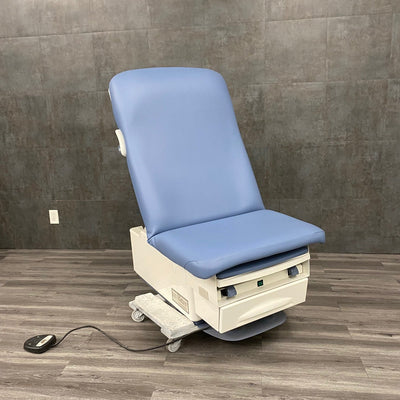


ADA Accessibility Requirements Made Simple: A Plain-English Guide for Medical Practices
If you've ever tried reading ADA, HHS, or Access Board requirements for accessible medical equipment, you probably know how frustrating it can be. The information is often spread across multiple websites, filled with technical language, and open to interpretation. One document leads to another, and before long you're digging through regulations just trying to answer a simple question:
"What does my exam table actually need to have?"
Keep in mind, ADA does not care how high the table goes, it it only cares if the lowest position is between 17" - 25"
You're not alone. Many healthcare providers, clinic managers, and equipment buyers have the same question.
To make things easier, we've translated the requirements for accessible exam tables into plain English so you can understand the practical features that matter without having to decipher government documents.
Why Accessible Exam Tables Matter
Accessible exam tables help ensure that patients with mobility limitations, wheelchair users, older adults, and individuals with disabilities can receive healthcare safely and comfortably.
The goal isn't just compliance—it's creating a better patient experience and reducing the risk of injury during transfers.
Quick Take: ADA does not care how high a table goes up to, it only cares about how low it goes so the patient can easily sit down or be transferred to the table
To be ADA compliant, an exam table or exam chair should meet all of the following requirements:
-
Height Adjustable: The exam table or chair should have powered height adjustment and lower to between 17 and 25 inches to make patient transfers easier and safer.
-
Accessible Armrests or Support Handles: Armrests or support handles should move out of the way during transfers and be available when needed to help patients sit down, stand up, or reposition themselves.
-
Comfortable Width: The seat or table surface should be at least 20 inches wide to provide patient comfort and support.
-
Easy Access: The exam table or chair should be easy to approach and use, with no obstacles blocking access.
-
Staff Training: Staff should be properly trained on how to operate the equipment and assist patients safely.
ADA Requirements Explained in Plain English
Official Requirement: The transfer surface must be adjustable to a height between 17 and 25 inches.
Means: It must be a powered exam table which can go up and down. When you bring the table down to the its lowest position. The lowest position should be anywhere between 17" - 25" from the floor.
The ADA is not concerned about how high the table can reach, it is concered about how low it can go so the patient can easily transfer from a wheelchair or another mobility device.
Official Requirement: Transfer supports.
Means: Patients need something to hold on to when being transferred from the wheelchair to the table.
Patients should have a stable support point while getting onto or off the table. This can include:
-
- Armrests
- Transfer handles
- Grab bars
Think about how someone would transfer from a wheelchair onto the table. Having sturdy supports available can help improve stability and confidence during the transfer process.
Official Requirement: Adequate transfer surface dimensions.
Means: The table top should be wide enough so the patient can fit on the table comfortably. The minimum width requirement is 28" wide.
A wider transfer surface generally provides better support and can make transfers easier for many patients.
Official Requirement: Unobstructed transfer access.
Means: Transfer Supports such as armrestrs, transfer handles and grab bars should move out of the way so there is a clear path to the exam table.
Although armrests and supports are important, they shouldn't block the patient's path onto the table.
The best solution is usually:
- Armrests that provide support when needed
- Armrests that swing away, fold down, or otherwise move out of the path during transfers
Patients need a clear route from their mobility device to the transfer surface.
Official Requirement: Compatibility with patient lifts and other accessibility equipment.
Means: Leave enough room for Wheelchairs and Patient Lifts to get to the table.
The exam table should be placed where mobility equipment can be used effectively. Make sure there is enough open space around the table for:
- Wheelchairs
- Patient lifts
- Transfer devices
- Caregiver assistance
Even the most accessible table becomes difficult to use if the room layout prevents safe and easy access.
Official Requirement: Staff training and proper use of accessible equipment.
Means: Train Staff on How to Use Accessible Equipment
Simply having accessible equipment alone is not enough. Staff should understand how to operate it safely and assist patients appropriately.
Training should include:
- Adjusting table height
- Using transfer supports correctly
- Safe patient transfer techniques
- Operation of patient lifts and related equipment
Proper training helps maximize the benefits of accessible equipment while improving safety for both patients and staff.
Check List
Simple Checklist when shopping for an ADA exam table
- Is the lowest point between 17 – 25 inches?
- ✅ Is it a power-adjustable table?
- ✅ Does it include armrests, grab handles, or transfer supports?
- ✅ Can those supports move out of the way during transfers?
- ✅ Is the transfer surface at least 28 inches wide?
- ✅ Is there enough room around the table for wheelchairs and patient lifts?
- ✅ Has staff been trained to use the equipment properly?
The Three Features That Matter Most
If you're looking for the simplest summary possible, accessible exam tables should generally provide:
1. A Power Height-Adjustable Table which lowers to 17" - 25" from the floor
2. Transfer Supports or armrests that can move out of the way
3. A Minimum 28-Inch Transfer Surface the table top should be a minimum of 28" wide
Take away
Accessibility requirements can seem complicated when you're reading government standards, but the practical takeaway is straightforward: patients need a table they can get onto safely, supports they can use during transfers, and enough space to move comfortably.
By focusing on accessible equipment, thoughtful room design, and staff training, healthcare facilities can improve both compliance and the quality of care they provide to every patient.
Official References
HHS Accessible Medical Diagnostic Equipment Requirements
U.S. Access Board Medical Diagnostic Equipment Standards