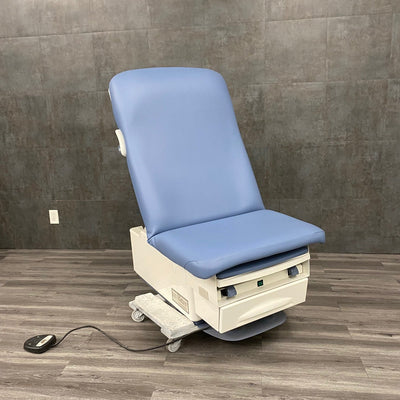


If you are pricing an accessible exam table right now, you have probably heard three different "requirements" from three different sales reps: 17 inches, 17 to 19 inches, or something in between. Getting this wrong is expensive. An exam table is a four-figure purchase per room, and the first federal compliance deadline has already passed.
Here is the short answer, straight from the federal source. The U.S. Department of Health and Human Services (HHS.gov) states that accessible medical diagnostic equipment must provide transfer surfaces that are "adjustable in height from 17 inches to 25 inches" and compatible with portable patient lifts. At Angelus Medical, we help practices across the country match equipment to these standards, and we see the confusion firsthand. This guide walks through what the rules actually say, why the marketplace numbers conflict, and how to evaluate a table before you spend. (Access-board.gov)
Quick Take: ADA does not care how high the table goes. It only cares how low it goes.
- Adjustable height (Power Exam Table)
- Minimum height between 17" - 25"
- Arm rests should be able to move out of the way
- The table surface is a minimum width of 28" across the table
- Table is located in a place which is easily accessible
- Your staff are trained on how to use the equipment
(Access-board.gov)

What Is the Actual Height Requirement for an ADA Compliant Exam Table?
An accessible exam table must have a transfer surface that adjusts from a low transfer position of any where between 17 inches to a high transfer position of 25 inches, measured from the floor to the top of the transfer surface. The requirement is the full adjustable range, not a single low number.
The authoritative source is the U.S. Access Board's Medical Diagnostic Equipment (MDE) Standards, which HHS adopted under Section 504 of the Rehabilitation Act in a final rule effective July 8, 2024. The rule covers doctors, dentists, hospitals, clinics, emergency rooms, and other providers that receive funding from HHS, including practices that participate in Medicare or Medicaid. Covered equipment includes examination tables, examination chairs for eye or dental procedures, weight scales, mammography equipment, and x-ray machines, according to HHS guidance on the new MDE requirements.
Most buyers search for "ADA exam table requirements," and that phrasing is fine in conversation. Technically, the mandate for most private practices comes from Section 504 rather than the ADA itself, and state and local government health facilities face similar obligations under a separate Department of Justice rule. The accessibility bar is the same either way: the Access Board's MDE Standards.
Why a range instead of one number? Because patients transfer at different heights. A low position near wheelchair seat height supports independent transfers, while higher positions support staff-assisted transfers and let the provider raise the patient to a safe working height for the exam itself. The range is what makes the equipment usable across real patients and real transfer techniques.
Why Some Reps Say 17 Inches?
Short answer is because they want to sell you sell you the more expensive model.
The real ADA Compliance:
- Adjustable height
- Power Table, sorry no manual exam tables
- Adjustable transfer height range of 17"-25"
- Means minimum height of the table between 17" - 25"
- Maximum height
- Not specified
- Transfer supports or grab handles
- Needs armrests for support
- Unostructed transfer access
- Arm rests has to move out of the way when the patient is being transferred to the exam table

Accessibility Covers the Whole Transfer, Not One Measurement

The MDE Standards are written around a complete, safe patient transfer, not a marketing spec. Beyond the adjustable height range, the standards and HHS guidance address elements including:
- Transfer supports. Handholds or rails positioned so patients can stabilize themselves while moving between a wheelchair and the table.
- Portable lift compatibility. Clearance around and under the base so a floor lift can roll into position. If your practice serves patients who need full assistance, it helps to understand how these devices work - our guide to what a Hoyer lift is covers the basics.
- Transfer surface dimensions. The surface itself must be large enough to transfer onto safely.
- Room to approach. Enough clear floor space beside the table for a wheelchair to pull alongside and position for the transfer.
In other words, a compliant setup supports the entire sequence: approach, stabilize, transfer, position, examine, and return. Evaluating equipment on the low height alone misses most of that sequence.
The Federal Deadlines Have Already Arrived

This is no longer a future planning item. As of July 8, 2026, each covered provider that uses exam tables and weight scales must have in place at least one accessible exam table and at least one accessible weight scale. If your scale still cannot accommodate a wheelchair, reviewing accessible medical scales belongs on the same to-do list as the table.
The other requirements that came with the HHS rule:
- New purchases must comply. MDE bought, leased, or otherwise acquired after July 8, 2024 must meet the accessibility standards until your practice reaches the required share - for most providers, 10 percent of each equipment type and at least one unit. Practices that specialize in conditions affecting mobility, such as rehabilitation and physical therapy, must reach 20 percent.
- You cannot turn patients away. A practice may not deny services it would otherwise provide because accessible equipment is unavailable in a given room or location.
- Staff must be ready. Providers need qualified staff who can operate the accessible features and assist patients with transfers and positioning.
- Placement matters. Accessible equipment must be positioned in the facility so patients with disabilities can readily use it, not parked in a storage room.
Quick Take: The at-least-one deadline passed on July 8, 2026. If your practice is still working toward it, the most direct route is typically a power exam table or procedure chair with a documented anywhere betweeen 17 inch to 25 inch low transfer position and MDE conformity documentation from the manufacturer.
How to Evaluate an Exam Table Before You Purchase?

Practices we work with often come to us after getting three conflicting answers from three different vendors. These are the questions our team encourages every buyer to ask before signing a quote:
- What is the documented transfer height range? Ask for the spec sheet showing the low and high transfer positions measured from the floor to the top of the transfer surface. You want a true 17 inch to 25 inches.
- Does the table provide transfer supports? Look for rails or handholds designed for patient transfers, not just side rails meant to keep paper rolls in place.
- Is it compatible with portable patient lifts? Confirm base clearance so a floor lift can straddle or approach the table.
- Will the manufacturer provide MDE conformity documentation? Written documentation of how the model aligns with the Access Board's MDE Standards beats a verbal "it's ADA compliant" every time.
- Does it fit your room and workflow? Clear floor space for a wheelchair approach, plus the practical details - storage, outlet access, upholstery, and cleaning. Our exam room furniture collection can help you plan the rest of the room around it.
One honest note on equipment type: fixed-height manual tables generally cannot meet the adjustability requirement, which is why most compliance purchases move from a manual exam table to power exam tables or exam and procedure chairs with a powered low transfer position.
In our Gardena showroom, the models practices most often choose for accessibility upgrades are power units with low transfer positions, such as the Midmark Ritter 222 and 223 power exam tables, the Midmark Ritter 626 Barrier-Free examination chair, the Brewer 6501 high-low power exam table, and the Midmark Ritter 630 procedure chair. Always confirm the specific model, year, and configuration against the manufacturer's documentation before you order. For a wider look at makes and models, see our guide to the best exam table brands.
The Bottom Line for Your Practice
The federal accessibility standard is not "17 inches." It is minimum of 17 inches to 25 inches, supported by transfer supports, lift compatibility, and adequate transfer dimensions - and the first deadline for having at least one accessible table in place has already passed.
Evaluate equipment against the complete standard, insist on documentation, and treat accessibility as more than a checkbox. An accessible room serves wheelchair users, elderly patients, and anyone with limited mobility more safely, reduces transfer strain on your staff, and protects the practice you have built.
Frequently Asked Questions
What Height Does an ADA Compliant Exam Table Need to Reach?
The transfer surface must adjust from a low transfer position of 17 inches to 25 inches, measured from the floor to the top of the transfer surface. HHS describes this adjustable range, along with portable lift compatibility, in its guidance on accessible medical diagnostic equipment.
Is an Exam Table That Lowers to 17 Inches Automatically Compliant?
No. The 17 inch low position is not even necessary. The requirements are that the table has to be adjustable height, with a minimum of 17" - 25" and armrests.
Is a Low Height of 17 to 19 Inches Still Acceptable?
Yes, it is absolutely acceptatble since it indicates anywhere between 17" - 25".
Do These Requirements Apply to Private Practices?
Yes, if the practice receives HHS funding, which includes participating in Medicare or Medicaid. The Section 504 rule reaches doctors, dentists, clinics, hospitals, and other providers that use medical diagnostic equipment in their services.
How Many Accessible Exam Tables Does a Clinic Need?
Covered providers that use exam tables needed at least one accessible exam table by July 8, 2026. Equipment acquired after July 8, 2024 must meet the standards until at least 10 percent of each equipment type is accessible, and practices specializing in mobility-related care must reach 20 percent.
What Happened on July 8, 2026?
That was the two-year deadline in the HHS rule. Covered providers that use exam tables and weight scales were required to have at least one accessible exam table and one accessible weight scale in place by that date.
Can a Manual Exam Table Meet the Standard?
No. The requirement is the table has to be adjustable which means power exam table.
Do Refurbished Exam Tables Count Toward Compliance?
The standards are about what the equipment does, not whether it is new. A certified refurbished power table with any where between 17" to 25" transfer position, transfer supports, and lift compatibility can serve an accessible exam room at a significantly lower cost than new. Confirm the model's conformity documentation before purchase.
What Besides the Exam Table Should a Practice Check?
The HHS rule also expects an accessible weight scale, staff who can operate the accessible features and assist with transfers, and equipment placed where patients can readily use it. Accessibility is evaluated as a program, not a single purchase.
Where Can Practices Find ADA Compliant Exam Tables and Chairs?
Angelus Medical has supplied clinics since 1946 and stocks new and certified refurbished accessible exam tables and procedure chairs, backed by an in-house service team, with a showroom in Gardena, California and shipping nationwide. Our team can help you compare models against the MDE Standards and your budget.
Since 1946, Angelus Medical has helped practices across the US source reliable, warranty-backed equipment - and accessibility upgrades are one of the most common projects we support today. If you are working toward compliance, our ADA compliant exam chairs and exam tables collection is the place to start, or contact our team to talk through the right fit for your rooms.