



Medical Scales That Keep Patient Intake Fast, Accurate, and Consistent (Gardena, Los Angeles & CA)
In modern clinical care, accurate patient weight isn’t optional—it drives dosing decisions, growth tracking, risk stratification, and longitudinal monitoring. The Angelus Medical Collection of Medical Scales is built for physicians, practice managers, and medical procurement teams who want reliable, clinic‑ready equipment for primary care, pediatrics, specialty clinics, urgent care, hospitals, and long‑term care across Gardena, Los Angeles County, and Southern California.
This collection can support common clinical scale needs—such as digital physician scales, floor scales, wheelchair scales, and more—similar to how large medical distributors categorize clinical weighing solutions.
What Medical Scales Are Used For
Medical scales support patient care workflows where weight, height, and related metrics matter:
- Routine vitals and intake: quick weight capture for every visit
- BMI screening and follow‑up: many physician scales can weigh and support BMI workflows when paired with height measurement (stadiometers/height rods).
- Bariatric care: higher capacity platforms and safer stepping surfaces help practices accommodate larger patients.
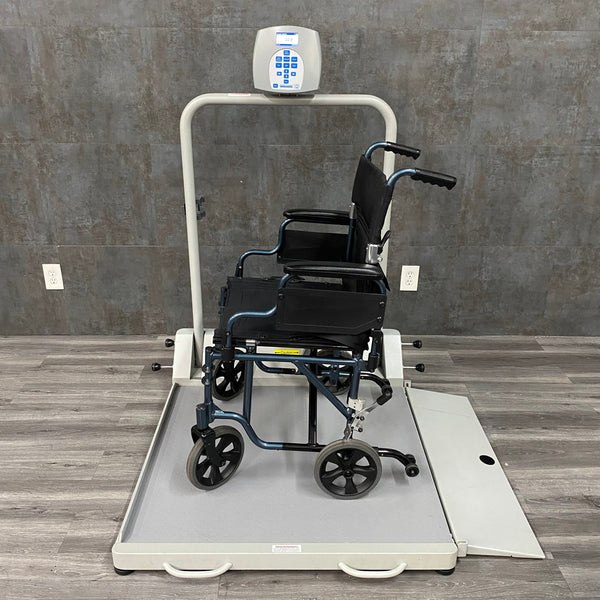
- Wheelchair and limited‑mobility weighing: wheelchair scales and chair scales reduce transfers and improve safety.
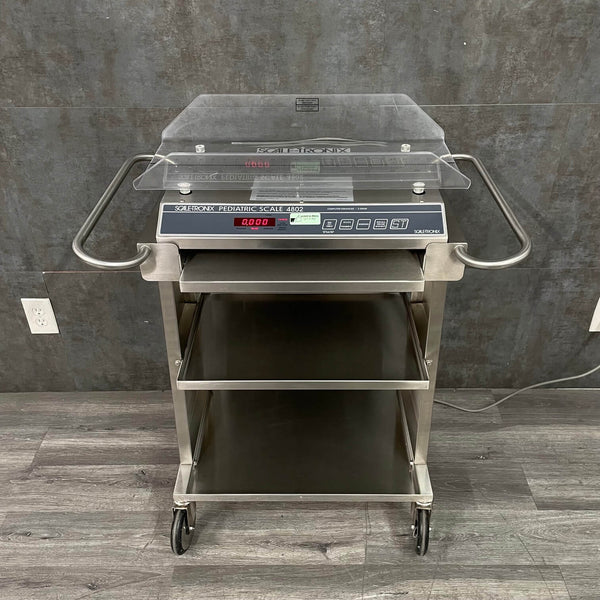
- Pediatrics and specialty workflows: certain scales and configurations are used to support pediatric monitoring and specialized measurement needs (e.g., clinic categories commonly include baby/infant, chair, wheelchair, bariatric).
Shop by Scale Type (Procurement‑Friendly Categories)
Digital Physician Scales (Clinic Standard)
Digital physician scales are designed for fast, repeatable weigh‑ins and often emphasize low‑profile platforms, easy‑to‑read displays, and options to support BMI workflows when combined with height measurement.
Some manufacturers describe physician scale lines with features like low, flat platforms, height measurement options, and even configurations intended for mobility (wheels) for exam‑room flexibility.
Scales with Height Rod / Stadiometer (Weight + Height in One Workflow)
Many clinics prefer a scale that supports height + weight measurement to streamline intake and BMI. Some products explicitly highlight integrated height rods and graduation/resolution details intended for clinical settings.
Wheelchair Scales (Accessibility + Throughput)
Wheelchair scales support weighing patients who cannot safely stand, reducing transfers and supporting safer workflows. Wheelchair scales commonly appear as a standard category within medical scale catalogs.
Chair Scales (Safer Weighing for Frail or Post‑Op Patients)
Chair scales help facilities weigh patients who need seated stability; they’re commonly listed as a dedicated medical scale type for healthcare environments.
Bariatric Scales (Higher Capacity, Larger Platforms)
Bariatric scales are designed for higher weight capacities and improved platform comfort for larger patients—often treated as a key clinical scale category alongside wheelchair and chair solutions.
Floor Scales & Remote Display Options
Floor scales are commonly used where quick weight capture is needed without a column footprint; some catalogs also highlight remote indicators and flexible placement concepts.
Key Features Physicians & Procurement Teams Compare
Accuracy & Readability
Medical scale listings often specify capacity and increment/readability (for example, common physician scale configurations describe high capacities and small increments intended for clinical use).
Some physician scale lines explicitly describe support for BMI calculation and clinical use in hospitals/clinics.
Connectivity & Data Capture (When You Need It)
Certain medical scale product families describe the ability to transmit data using connectivity options such as Wi‑Fi/Bluetooth or integration ecosystems (where supported by specific models).
Safety & Patient Experience (Platform, Stability, Mobility)
Some product pages emphasize non‑skid platforms, reinforced bases, and features intended to improve stability or patient confidence—important for fall‑risk populations.
Calibration & Maintenance Readiness (Facility Compliance)
Clinical sources emphasize that calibration frequency depends on usage factors such as how often a scale is used, whether it is frequently moved, and whether weight impacts medication dosing—and recommend checking accuracy with certified calibration weights.
Benefits of Clinic‑Grade Medical Scales
- Faster intake and fewer bottlenecks: choosing the right scale type (stand‑on vs chair vs wheelchair) keeps patient flow moving.
- Better clinical decision support: accurate weights support weight‑based dosing and monitoring (noted as a key reason calibration matters in healthcare contexts).
- More consistent longitudinal tracking: reliable, repeatable measurements help track trends in primary care, pediatrics, and chronic disease management.
- Improved accessibility: wheelchair and chair scales support safe weighing for patients who cannot stand.
- Procurement simplicity: standardizing on a consistent scale approach (type + accessory plan) reduces SKU sprawl and reordering friction (procurement best practice suggestion).
“Inside Information” Helpful Hints Buyers Often Miss
- Moving a scale can change how often you should verify accuracy. Clinical guidance notes calibration/accuracy checks depend on whether the scale is frequently moved and how it’s used.
- Certified calibration weights matter. Guidance specifically recommends using certified calibration weights rather than consumer weights to verify accuracy.
- Choose the scale based on patient mix, not “one‑size‑fits‑all.” Medical scale catalogs commonly separate stand‑on, chair, wheelchair, and bariatric scales—because workflow and safety needs differ.
- If BMI workflows matter, prioritize height integration early. Multiple product pages highlight integrated height rods/stadiometers and BMI‑adjacent workflows—useful when standardizing intake.
-
Consider NTEP certification when accuracy compliance is critical for your environment. Some manufacturers market specific medical scales as NTEP‑certified and describe it as meeting strict standards for weight measurement.
Frequently Asked Questions
Q1: What are medical scales used for in clinics?
A: Medical scales are used to accurately measure patient weight for intake, monitoring, and clinical decision support.
Q2: What types of medical scales should a physician office consider?
A: Common healthcare categories include stand‑on physician scales, wheelchair scales, chair scales, bariatric scales, and baby/infant scales depending on patient population.
Q3: What is a physician scale?
A: Physician scales (also called medical or doctor scales) are designed for healthcare settings to provide accurate patient weight measurement and reliable performance for monitoring.
Q4: Why do clinics buy scales with height rods or stadiometers?
A: Height measurement paired with weight supports BMI and streamlines intake workflows; some clinical products highlight integrated height rods for this purpose.
Q5: What is BMI functionality on a medical scale?
A: Some physician scales describe built‑in BMI calculation functionality as part of clinical assessment workflows.
Q6: When is a wheelchair scale necessary?
A: Wheelchair scales are helpful when patients cannot safely stand for weighing; they are a common category in medical scale catalogs.
Q7: When should a facility use a chair scale?
A: Chair scales are useful for patients who require seated stability during weighing and are commonly listed as a dedicated clinical scale type.
Q8: What is a bariatric medical scale?
A: Bariatric scales are designed for higher capacities and improved usability for heavier patients; they are a standard category of medical scales.
Q9: Do medical scales need calibration?
A: Yes—calibration and accuracy checks are important, and guidance notes that frequency depends on usage, movement, and clinical application.
Q10: How often should medical scales be calibrated or checked for accuracy?
A: Guidance indicates it varies by scale model and application and depends on factors like how often it’s used and whether it’s moved frequently.
Q11: What should clinics use to verify scale accuracy?
A: Clinical guidance recommends using certified calibration weights rather than consumer weights to check accuracy.
Q12: What does “increment/readability” mean on a medical scale listing?
A: It refers to the smallest unit the scale displays (the measurement step), which is commonly specified on clinical scale product pages.
Q13: Do medical scales offer connectivity for saving measurements?
A: Some manufacturers describe connectivity options (e.g., Wi‑Fi/Bluetooth or integration ecosystems) on specific physician scale models; capability varies by model.
Q14: What is NTEP certification and why might it matter?
A: Some manufacturers market certain medical scales as NTEP‑certified and describe it as meeting strict standards for weight measurement; suitability depends on facility needs.
Q15: What should procurement teams buy along with a medical scale?
A: Common add‑ons include height measurement tools (if needed) and certified calibration weights for verification, plus power accessories appropriate to the model.