


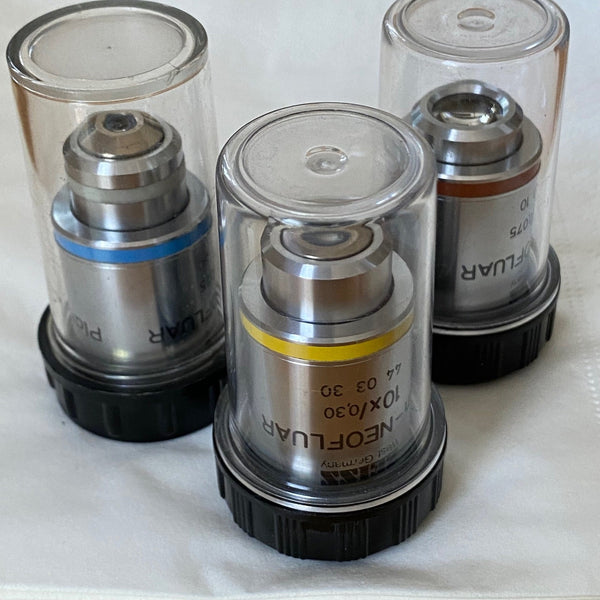
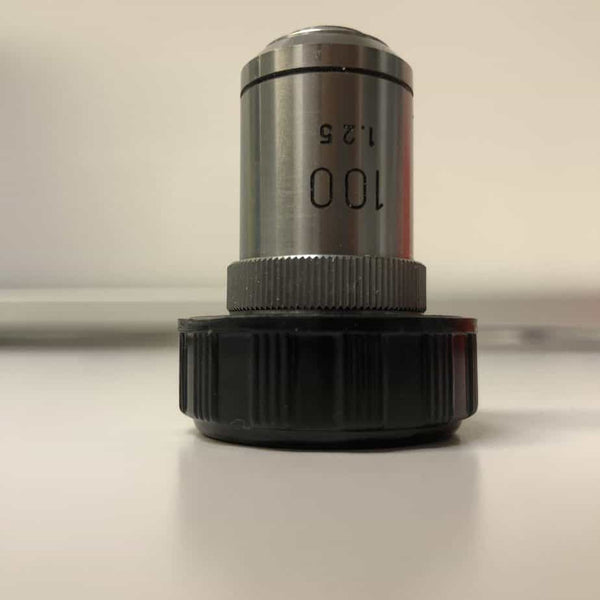
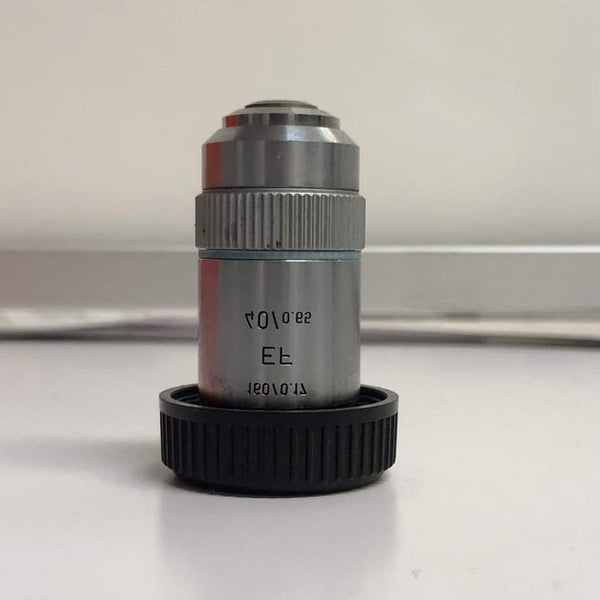
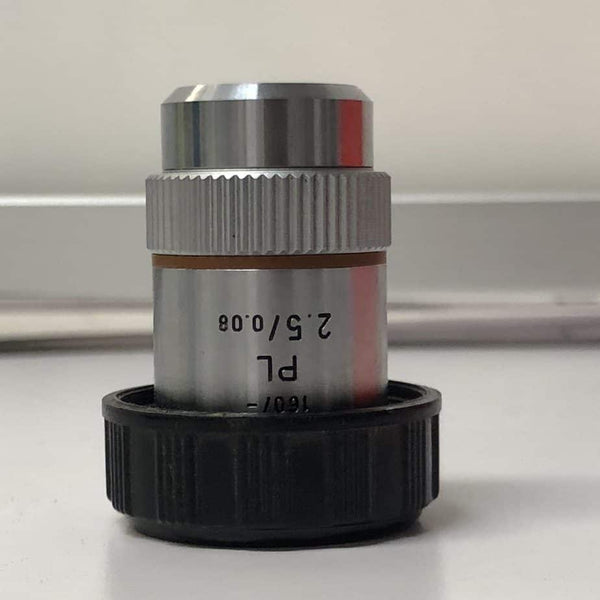
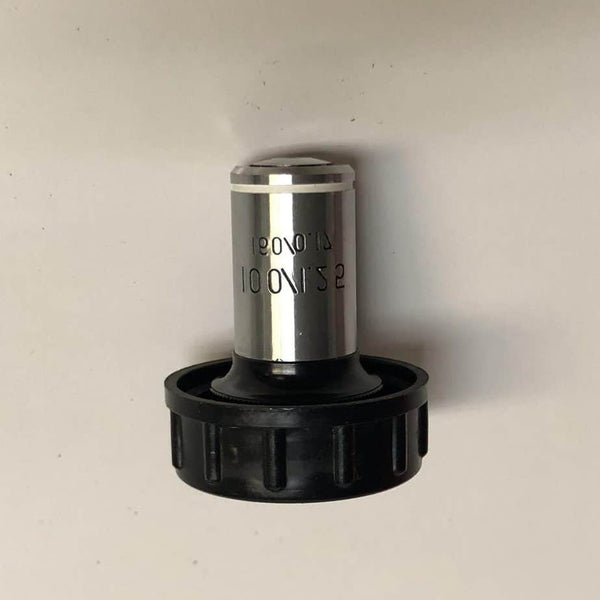
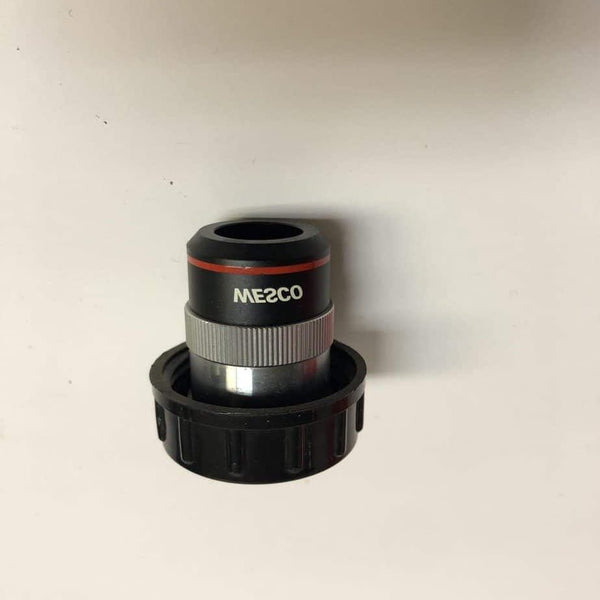
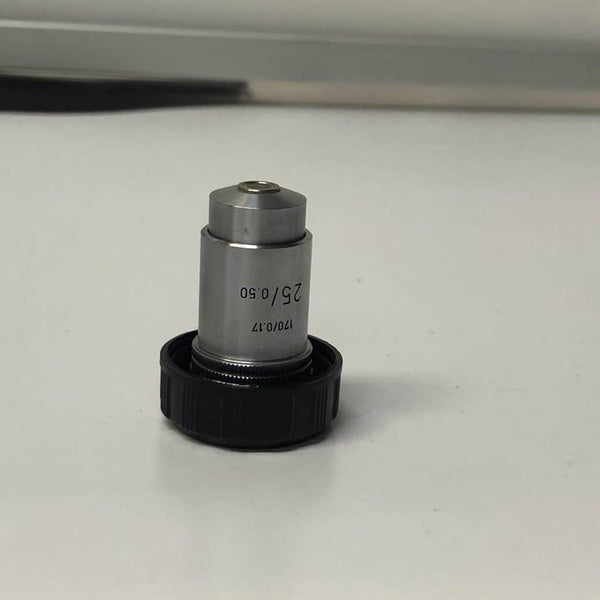
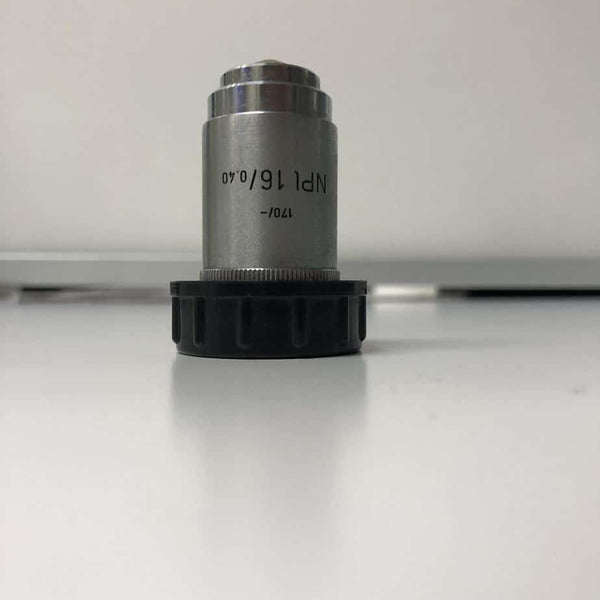
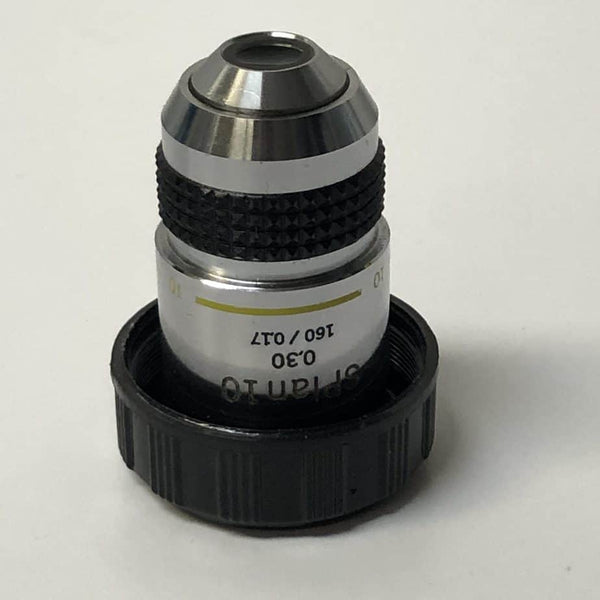
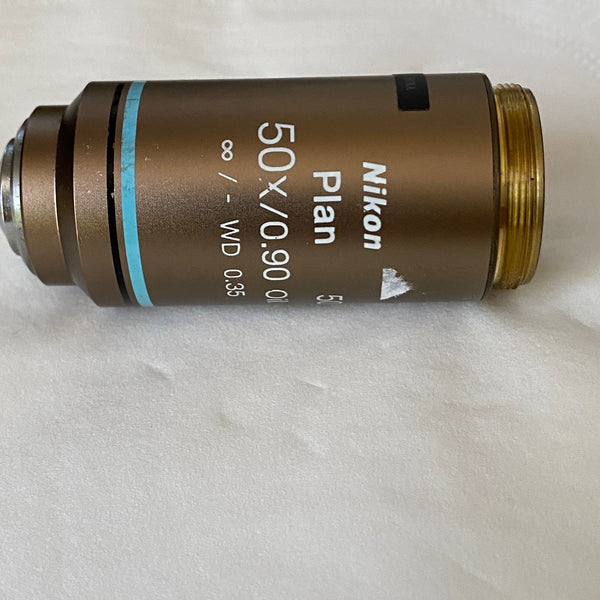
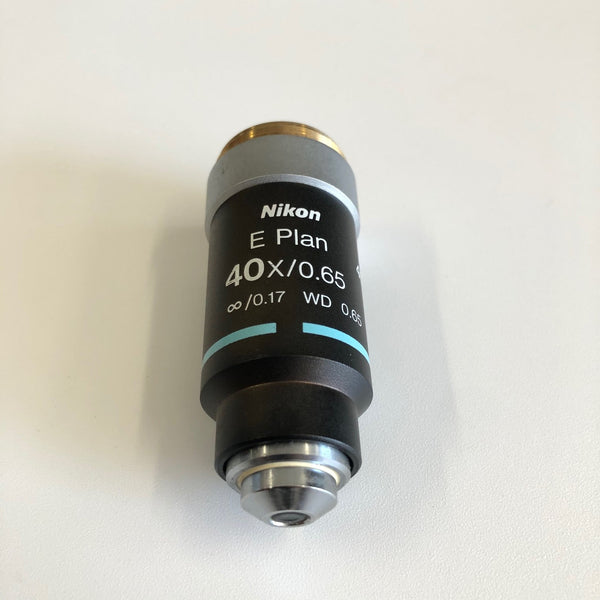
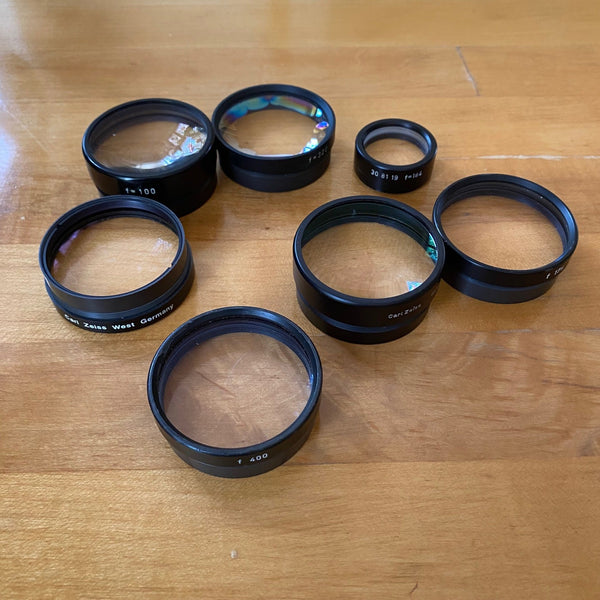
Collection of Objective Lenses at Angelus Medical
Objective lenses are integral components of optical systems such as microscopes, telescopes, and slit lamps. These precision-engineered lenses are responsible for gathering light from the observed specimen and magnifying it to produce clear, detailed images. Available in various configurations and magnifications, objective lenses are designed to meet the specific needs of scientific research, medical diagnostics, and industrial applications.
Objective lenses play a critical role in medical applications by providing magnification and optical clarity for detailed examinations and procedures. Here are key ways they are utilized:
1. Microscopy
-
Pathology and Histology: Used in microscopes to examine tissue samples and identify abnormalities like cancerous cells.
-
Microbiology: Enables visualization of bacteria, viruses, and other microorganisms for diagnosis and research.
-
Cell Analysis: Assists in studying cellular structures and functions.
2. Ophthalmology
-
Slit Lamps: Objective lenses in slit lamps help ophthalmologists observe the eye's anterior and posterior segments for diagnosing conditions like glaucoma and cataracts.
-
Retinal Imaging: Provides detailed views of the retina during examinations.
3. Surgery
-
Surgical Microscopes: Used in procedures such as neurosurgery, ENT surgery, and ophthalmic surgery to magnify tissues and enhance precision.
-
Endoscopy: Objective lenses are integral in cameras for minimally invasive surgeries, enabling clear visualization of internal structures.
4. Diagnostic Equipment
-
Imaging Systems: Used in devices like optical coherence tomography (OCT) and confocal microscopes for detailed imaging of tissues and organs.
-
Blood Analysis: Objective lenses in hematology analyzers help identify blood cell morphology.
5. Education and Research
-
Teaching Tools: Medical training often involves the use of microscopes with objective lenses for learning anatomy and pathology.
-
Drug Development: Researchers use objective lenses to study drug interactions at the cellular level.
Benefits of Objective lenses include:
-
High Magnification: Enables detailed observations of minute structures, enhancing diagnostic and research capabilities.
-
Optical Clarity: Precision design ensures sharp and distortion-free imaging.
-
Versatility: Used across multiple industries including healthcare, education, manufacturing, and astronomy.
-
Efficiency: Reduces examination or observation time due to clear and magnified views.
-
Durability: Made from high-quality materials like glass or coated optics, ensuring long-lasting use.
-
Enhanced Functionality: Can be paired with additional components like filters or cameras for advanced imaging needs.
Some of the most commonly used and sought-after types of objective lenses include:
Microscopy Objective Lenses
-
4x, 10x, 40x, and 100x Lenses (Standard Lab Setups): These are standard magnifications for compound microscopes, popular in biology labs for examining samples at different levels of detail.
-
Plan Achromatic Lenses: Widely used in research and clinical settings for their ability to produce a flat and sharp field of view across most of the slide.
-
Phase Contrast Lenses: Popular in microbiology and cell biology for observing live, unstained specimens with enhanced contrast.
-
Fluorescence Lenses: Designed for fluorescence microscopy, these lenses are used in advanced imaging applications in research and medicine.
Ophthalmic Objective Lenses
-
Haag-Streit Lenses: Known for their precision, these are highly sought-after for slit lamps in eye care clinics.
-
Gonioscopy Lenses: Used for examining the anterior chamber angle of the eye, popular among ophthalmologists.
-
Fundus Imaging Lenses: Commonly used in retinal imaging devices to capture high-quality images of the fundus.
Industrial and Precision Lenses
-
Long Working Distance Lenses: Popular in manufacturing and quality control processes where space is needed between the lens and the specimen.
-
Infinity-Corrected Lenses: Used in high-end systems, these are favored for their flexibility in adding components like filters or cameras.
Frequently Asked Questions (FAQs) and Answers
- What are objective lenses made of? They are typically made of high-quality glass or other optical materials with specialized coatings.
- What is the function of an objective lens? It gathers light from the specimen and magnifies it to create a detailed image.
- What magnification levels are available? Common magnifications include 4x, 10x, 40x, 100x, and higher for specialized lenses.
- What is the difference between achromatic and plan objective lenses? Achromatic lenses correct color distortion, while plan lenses provide a flat field of view across the sample.
- Can objective lenses be replaced individually? Yes, individual lenses can be replaced or upgraded as needed.
- What industries use objective lenses? Healthcare, research, education, manufacturing, and astronomy widely use objective lenses.
- Do objective lenses require maintenance? Regular cleaning with lens wipes and proper storage ensures optimal performance.
- How do immersion objective lenses work? They use a liquid like oil or water between the lens and specimen to enhance image resolution.
- Are objective lenses compatible with all microscopes? Compatibility depends on the microscope’s design and specifications.
- What is a long working distance lens? It is an objective lens designed for observing specimens at greater distances from the lens.
- What is the numerical aperture of an objective lens? It indicates the lens's ability to gather light and resolve fine details.
- Can objective lenses be used for photography? Yes, they are often integrated into camera systems for specialized imaging.
- What is the difference between dry and oil immersion lenses? Dry lenses work without additional liquid, while oil immersion lenses require oil for enhanced magnification and clarity.
- How are objective lenses cleaned safely? Use lens-specific cleaning solutions and microfiber cloths to avoid scratches.
- Where can I buy objective lenses? They are available through scientific equipment suppliers, manufacturers, or online platforms specializing in optical products.